

Contents
- Why locate fulfillment in the Monterrey metro area?
- What the industrial corridor gives you
- How the two-warehouse model works in practice
- Where to hold Mexican inventory
- Definitions
- Frequently asked questions
- Why locate fulfillment in the Monterrey metro area?
- Why not just hold everything in a US warehouse?
- Why not a warehouse in central Mexico instead?
- How much inventory do I need to hold in Mexico?
- Does peak season change the calculation?
- Related Reading
- Sources
Nuevo Leon works for fulfillment because it is the first major industrial and consumer market inside Mexico after the busiest land border crossing. A well documented truck reaches Monterrey from Laredo in one to two business days, which means you can restock quickly from the US side while still shipping to Mexican customers as a domestic parcel.
- Laredo is the busiest land port in North America, and Nuevo Leon is the first major market inland from it (WorldCity, Census).
- A well documented truck reaches Monterrey from Laredo in one to two business days (operational data).
- From a Monterrey warehouse, delivery to Mexican customers is a domestic parcel rather than an import.
- Trucking carries roughly 73 to 74 percent of US Mexico trade, so the corridor is served by deep carrier capacity (WorldCity, Census).
- Nuevo Leon has been one of the main destinations of nearshoring investment in Mexico, which is why industrial space concentrates there.
Why locate fulfillment in the Monterrey metro area?
Because it is close enough to the border to restock in a day or two, and deep enough inside Mexico that shipping to customers is domestic. Most other locations give you one of those two things, not both.
If you look at where cross-border sellers actually keep their Mexican inventory, the Monterrey metropolitan area comes up again and again, and the reason is a specific piece of geography rather than a preference. Nuevo Leon sits a few hours of driving inland from Laredo, which is the busiest land port in North America and the crossing that handles the bulk of US Mexico trade. That proximity means a well documented truck moves from a Laredo warehouse to a Monterrey warehouse in one to two business days. At the same time, Monterrey is a genuine internal market and a national distribution point, so a parcel leaving a warehouse there reaches a Mexican customer as an ordinary domestic shipment rather than an international one. Most alternatives give you one of these and not the other. A warehouse further south, closer to Mexico City, puts you nearer the largest population concentration but makes restocking from the US a longer and more expensive leg, which forces you to hold more inventory as a buffer. A warehouse only on the US side keeps restocking trivial but leaves every customer order crossing the border individually, with the cost and delay that implies. Nuevo Leon is the point where both work at once: short replenishment from the north, domestic delivery to the south. That is why the model most sellers converge on is a pair of warehouses, one in Laredo for consolidation and one in the Monterrey metro for fulfillment, rather than a single site anywhere.
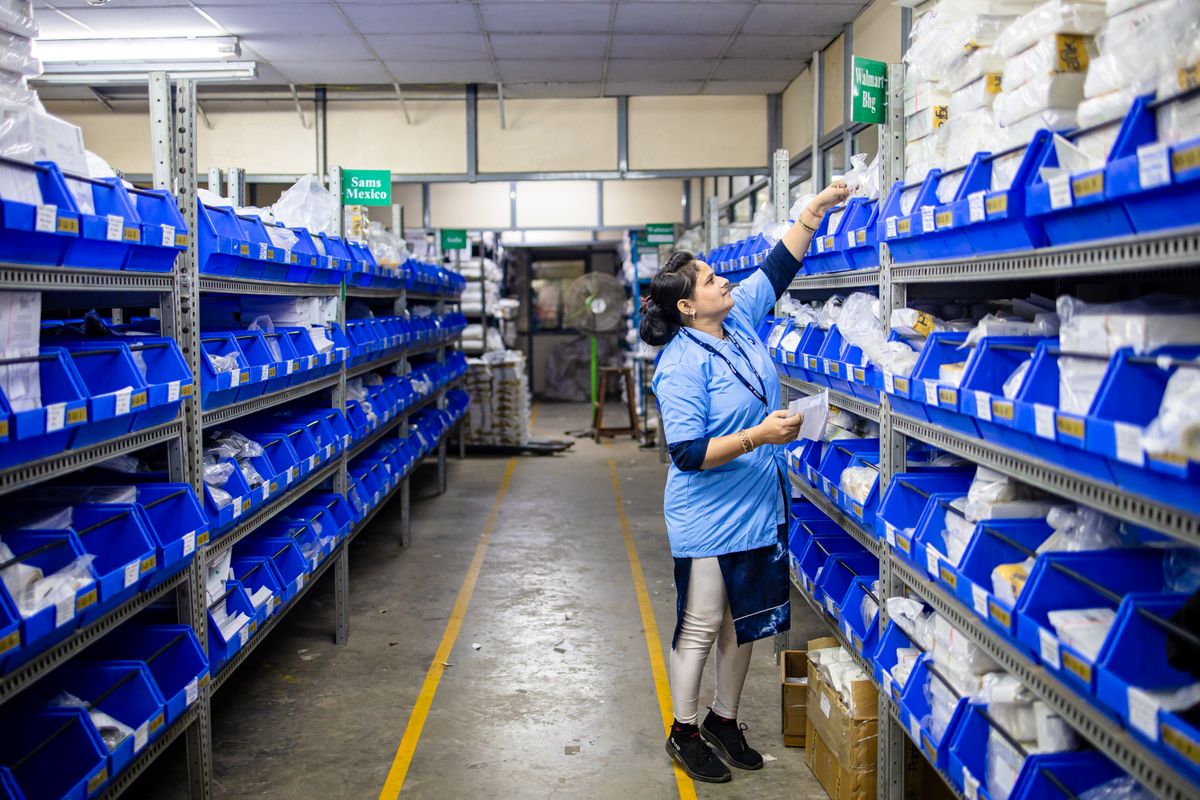
What the industrial corridor gives you
Depth of supply. Nuevo Leon has absorbed a large share of nearshoring investment, so there is real industrial space, established carriers and available labor. Santa Catarina and the surrounding municipalities are part of that corridor.
Geography explains why the location works, but availability explains why it is practical, and this is where Nuevo Leon separates from places that look similar on a map. The state has been one of the main destinations of nearshoring investment in Mexico, and that investment has produced the things a fulfillment operation actually needs: purpose built industrial space rather than converted buildings, carriers that already run the routes daily, customs brokers with volume on the corridor, and a labor market used to warehouse and manufacturing work. The industrial footprint spreads across the Monterrey metropolitan area rather than sitting in one place, and municipalities such as Santa Catarina, Apodaca and Escobedo host a large share of it. For a foreign seller the practical consequence is choice: you are not negotiating with the only operator who can take your pallets, and you are not waiting weeks for a carrier slot. Depth of supply also matters for the thing nobody plans for, which is peak. Mexican retail concentrates heavily around Hot Sale in the spring and Buen Fin in November, and those weeks are exactly when a thin market fails you. Being in a corridor with real capacity means you can add temporary space or extra pickups when volume spikes rather than discovering that the one carrier serving your area is full. That is worth more than a slightly cheaper square meter rate in a quieter location, and it is a large part of why fulfillment concentrates where it does.

How the two-warehouse model works in practice
Consolidate in Laredo, import in one shipment, hold sellable stock in the Monterrey metro, ship domestically to customers, and return to the same Mexican address. Replenish on a reorder point rather than by guessing.
The operational shape most sellers land on is simple enough to describe in a paragraph, and it is worth setting up deliberately rather than arriving at by accident. Goods from your suppliers arrive at a Laredo warehouse, where they are received, consolidated and prepared, which means Spanish NOM labeling and anything else the product needs before it can be sold in Mexico. When there is enough volume to justify it, the consolidated load is imported in a single shipment rather than many small ones, which spreads the fixed customs costs across more goods. The load crosses and arrives at the Monterrey area warehouse in one to two business days. From there, customer orders ship domestically, at domestic prices and domestic speeds, and returns come back to the same Mexican address instead of crossing the border one parcel at a time. Replenishment runs on a reorder point per product rather than on someone remembering, so when stock in Mexico drops below a set level the next consolidation is triggered automatically. Because the northern leg is short, the stock you hold in Mexico can be small, which is the part that surprises people: proximity to the border is what lets you run lean rather than what forces you to hold more. The alternative, holding months of inventory because replenishment is slow, ties up capital in exactly the products that may not sell. BringGo Ship operates this model directly, with warehouses in Laredo and Monterrey, so consolidation, fulfillment and returns sit in one chain.
Where to hold Mexican inventory
| Location | Restocking from the US | Delivery to Mexican customers |
| US side only | Trivial | Every order crosses the border |
| Monterrey metro (Nuevo Leon) | 1 to 2 business days | Domestic parcel |
| Central Mexico | Longer, more buffer stock needed | Domestic parcel |
| Two-warehouse model | Laredo consolidates | Monterrey ships and receives returns |
| Peak capacity | Deep carrier market on the corridor | Matters at Hot Sale and Buen Fin |
Definitions
- Two-warehouse model: The two-warehouse model pairs a consolidation warehouse on the US side with a fulfillment warehouse inside Mexico.
- Reorder point: A reorder point is the stock level that automatically triggers the next replenishment shipment.
- Monterrey metro: The Monterrey metropolitan area is the industrial corridor in Nuevo Leon that includes municipalities such as Santa Catarina, Apodaca and Escobedo.
Frequently asked questions
Why locate fulfillment in the Monterrey metro area?
Because it is close enough to Laredo to restock in one to two business days and deep enough inside Mexico that shipping to customers is a domestic parcel. Most other locations give you one of those two things but not both, which is why cross-border sellers concentrate there.
Why not just hold everything in a US warehouse?
Because then every customer order crosses the border individually, carrying its own formalities, cost and delay. Restocking stays easy but the customer experience and the per-order cost both suffer. Holding sellable stock inside Mexico turns each order into an ordinary domestic delivery.
Why not a warehouse in central Mexico instead?
Central Mexico puts you closer to the largest population concentration, but replenishment from the US becomes a longer and more expensive leg. That forces you to hold more buffer inventory, which ties up capital. Nuevo Leon keeps replenishment short while still delivering domestically.
How much inventory do I need to hold in Mexico?
Less than most people expect, because the northern leg is short. You are covering the replenishment window rather than stockpiling, so a few weeks of sales of your fastest moving products is often enough. Proximity to the border is what lets you run lean rather than what forces you to hold more.
Does peak season change the calculation?
Yes, and it argues for the corridor rather than against it. Mexican retail concentrates around Hot Sale in the spring and Buen Fin in November, and those are the weeks a thin local market fails you. A corridor with real carrier and space capacity lets you add pickups or temporary space instead of being told everything is full.
Related Reading
- Laredo and Monterrey border warehousing
- nearshoring to Mexico
- binational fulfillment from one inventory
- our Monterrey, Mexico warehouse
Run the two-warehouse model with BringGo Ship
Sources
- WorldCity, Laredo trade data (ustradenumbers.com)
- US Census Bureau, trade statistics (census.gov)
- Secretaría de Economía (gob.mx)
Note: This content is for general information only and is not legal, tax or customs advice. Rates and rules can change often in 2026; verify the current details with an official source (SAT, DOF, CBP) or a licensed customs broker before acting.
How this was made: The BringGo Ship team chose the topic and the sources. The text was drafted with AI assistance, its figures and regulatory details were checked against official sources (DOF, SAT, ANAM, CBP), and the article was reviewed by our team before publication.
Daniel Brooks
Logistics and Customs Lead
Covers US Mexico cross-border logistics and customs at BringGo Ship, with warehouses in Laredo and Monterrey.
View profile