

Contents
- Consolidation is a customs decision wearing a freight costume
- Labeling is the work that must happen before crossing
- What inspection actually looks like when it is done properly
- Clearance is a formal process, so preparation is the only lever
- What a red light costs
- Storage in Laredo is cheaper than storage in the wrong country
- The division of labor that works
- The cost of finding a problem at each stage
- A worked example on one mislabeled SKU
- What a prep specification should contain
- Why the sampling rule matters more than it sounds
- Keeping the buffer north as a real option
- Measuring whether the prep step is earning its keep
- When to skip the Laredo step
- How BringGo Ship Handles This
- Frequently asked questions
Laredo exists in a cross border supply chain for one reason: it is the last place a problem can be fixed cheaply. A mislabeled carton corrected in a Texas warehouse costs an hour. The same carton corrected after it has cleared into Mexico costs a return leg, a fresh entry and a week.
This article covers what should happen in a border facility before goods cross, and why each of those activities is worth the handling it adds.
Consolidation is a customs decision wearing a freight costume
The obvious reason to consolidate is freight efficiency. The larger reason is that the fixed customs charges are per entry rather than per unit. The customs processing fee carries a floor of 462 pesos, which applies below a customs value of roughly 57,750 pesos, and brokerage starts at 3,500 MXN.
Ten small shipments therefore pay roughly 39,620 pesos of fixed charges. One consolidated entry pays roughly 3,962 pesos. On 500 units that is the difference between 79 pesos and 7.9 pesos per unit, and it is invisible on a freight rate card.
| Pattern | Entries | Fixed charges | Per unit at 500 units |
| Ship as orders arrive | 10 | Roughly 39,620 pesos | 79 pesos |
| Weekly consolidation | 4 | Roughly 15,848 pesos | 32 pesos |
| Single consolidation | 1 | Roughly 3,962 pesos | 7.9 pesos |
Labeling is the work that must happen before crossing
Product information has to be presented in Spanish, and this is a legal requirement rather than a marketplace preference:
"Los datos que ostenten los productos o sus etiquetas, envases y empaques y la publicidad respectiva, tanto de manufactura nacional como de procedencia extranjera, se expresarán en idioma español y su precio en moneda nacional."
Ley Federal de Protección al Consumidor
A unit that crosses without compliant labeling has already paid duty, IVA, the customs processing fee and brokerage. Fixing it afterwards means either relabeling inside Mexico, which requires a facility that can do it, or moving the goods back north, which is a fresh import into the United States with its own declaration.
Relabeling in Laredo costs handling time. Relabeling after the fact costs the crossing twice. That asymmetry is the whole argument for prep before the border.
How consolidated pallets are then priced across the border is covered in LTL From Texas to Monterrey: Transit Times, Pallet Pricing and When FTL Wins.
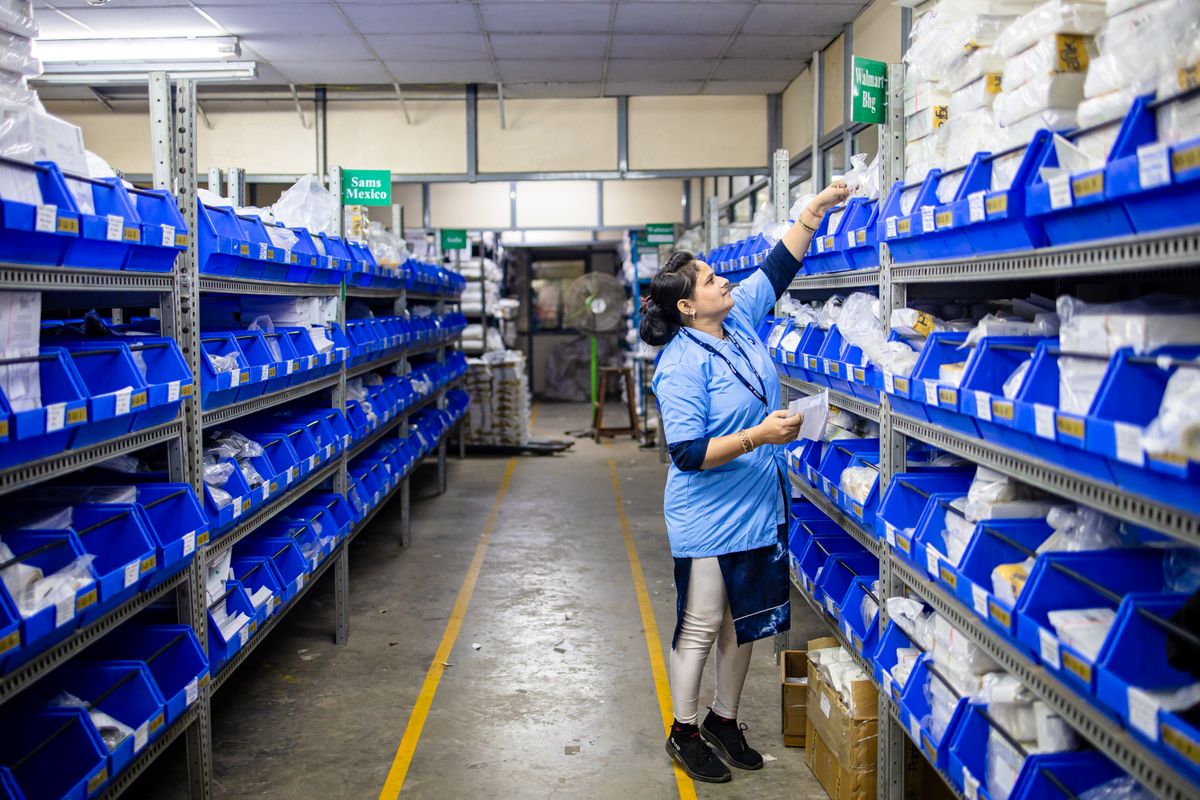
What inspection actually looks like when it is done properly
- Count against the packing list, then against the entry. The packing list says what was intended. The entry says what was declared, and only one of those has legal consequences.
- Label check per SKU, not per pallet. A pallet is compliant only if every carton on it is.
- Damage screen before consolidation. A damaged unit found in Texas is removed. Found in Monterrey it is a return.
- Classification confirmation against the physical goods. The code on the entry has to describe what is actually in the carton.

Clearance is a formal process, so preparation is the only lever
"Para efectos de esta Ley, se entiende por despacho aduanero el conjunto de actos y formalidades relativos a la entrada de mercancías al territorio nacional y a su salida del mismo."
Ley Aduanera, Article 35
"En México solo un agente aduanal con patente puede presentar el pedimento."
Servicio de Administración Tributaria
Once a shipment reaches the border, the seller has no remaining levers. The entry is filed by a licensed broker with whatever information exists at that moment. Everything that could shorten the crossing had to happen before the truck moved, which is precisely why the Laredo step is not a staging convenience.
What a red light costs
A shipment released on the green light reaches the destination warehouse in 1 to 2 business days after clearance, on a route where the driving portion is roughly 3 hours. A physical inspection adds 1 to 2 days.
The cost is not only the days. An inspection on a consolidated entry holds the whole consolidation, so 500 units wait for a question about 1 of them. That is an argument for accuracy rather than against consolidation: the larger the entry, the more expensive a preventable query becomes.
Storage in Laredo is cheaper than storage in the wrong country
Holding buffer stock on the US side keeps optionality. The goods have not been imported, so no duty or IVA has been paid, and they can still be sent somewhere else, relabeled for a different market, or returned to the supplier.
Once the same stock crosses, it is capital committed to one market. Moving it back is possible and it is a customs event in its own right. Where demand is uncertain, keeping the buffer north of the border and crossing to a schedule preserves choices that crossing early destroys.
The division of labor that works
North of the border: receive, inspect, relabel, consolidate, prepare the entry. South of the border: hold sellable stock close to the buyer and fulfil. The rule is that anything which can fail should fail in Texas, and anything which needs to be near the customer should be in Mexico.
The cost of finding a problem at each stage
The same defect costs a different amount depending on where it is discovered, and the multiplier between the cheapest and the most expensive point is large enough to justify the whole prep step.
| Where found | What it takes to fix | Relative cost |
| Supplier, before shipping | Correct at source | Lowest |
| Laredo, before crossing | Relabel or remove from the consolidation | Handling time |
| At the border | Query, possible inspection, 1 to 2 days | Delay plus demurrage risk |
| Mexican warehouse, after clearance | Relabel locally or hold | Full landed cost already paid |
| Buyer, after delivery | Return, refund, complaint | Highest |
Rows 4 and 5 are the ones that end programs. By row 4 the shipment has paid duty, IVA at 16 percent of the customs value, the customs processing fee and brokerage. Nothing about fixing it recovers any of that.
A worked example on one mislabeled SKU
Take 200 units of a SKU inside a 500 unit consolidation, where the Spanish label is missing a required element. Caught in Laredo, the fix is roughly 2 hours of relabeling and the consolidation departs on schedule. Caught after clearance, those 200 units sit in hold while a solution is arranged, and the 300 compliant units carry the entire fixed customs cost of the entry rather than sharing it across 500.
That last point is the one people miss. A partial hold does not only strand the affected units, it raises the per unit cost of the units that were fine, because roughly 3,962 pesos of fixed charges now spreads across 300 rather than 500.
What a prep specification should contain
Prep is only reliable when it is written down. A specification that a warehouse can execute without asking questions has 6 parts.
- Per SKU label requirement, with the artwork file reference and the placement rule.
- Carton and pallet standard, including height limit, label placement on 2 adjacent sides, and whether mixed SKUs are permitted.
- Inspection sampling rule, stating what is checked at 100 percent and what is sampled.
- Damage disposition, naming who decides and what happens to a rejected unit.
- Consolidation cadence, so the warehouse knows when to hold and when to release.
- Document handover, naming which records go to the broker and when.
Why the sampling rule matters more than it sounds
Checking every carton is expensive and checking none is negligent. The workable middle is 100 percent on the things that stop a shipment and a sample on the things that do not. Labels and counts stop shipments, so they are checked completely. Cosmetic packaging condition does not, so it is sampled.
Getting this backwards is common: warehouses that inspect cosmetics carefully and check labels casually produce beautiful pallets that get held at the border.
Keeping the buffer north as a real option
Stock held in Laredo has not been imported. That means no duty and no IVA have been paid, and the goods remain redirectable. Once they cross, they are committed: they belong to one market, they have paid the full landed cost, and moving them back is a fresh import into the United States with its own declaration.
For a seller testing demand or running a seasonal catalog, that optionality has real value. The buffer sits north, the crossings run to a schedule sized by demand, and the decision to commit inventory to Mexico is made weekly with fresh information rather than once, months earlier, on a forecast.
Measuring whether the prep step is earning its keep
Four numbers answer it, and all 4 are recorded during work that is already happening. Units rejected at prep, which is the value the step created. Border queries per 100 entries, which should fall as prep matures. Days from receipt in Laredo to release for crossing, which is the cost the step adds. And units held after clearance, which is the failure the step exists to prevent and should trend toward zero.
If the first number is zero across several months, the prep is either unnecessary for that supplier or it is not actually being performed. Both are worth knowing, and only the measurement distinguishes them.
When to skip the Laredo step
Not every lane needs it. A supplier with a long record of compliant labeling, stable classifications and accurate counts is a candidate for crossing directly, and forcing their goods through an unnecessary handling step adds days for no benefit.
The honest test is the rejection rate. A supplier whose goods have not produced a prep rejection in 6 months has earned a direct lane. One whose goods produce rejections regularly has not, and the prep step is the cheapest place to keep absorbing them.
The standards this prep work is ultimately judged against are set out in Mexico Warehouse Receiving: Appointments, Labels and the ASN That Prevents a Rejection.
How BringGo Ship Handles This
BringGo Ship holds and prepares stock at our Laredo facility so problems surface where they are cheap to fix. Our team relabels to the NOM file and consolidates, and the classification is settled before the goods move. Sellers keep the buffer north of the border where it remains redirectable, and cross to a schedule sized by demand rather than committing inventory to one market months in advance.
Frequently asked questions
Does staging in Laredo add days? It adds handling time and removes exception time. On a lane where a preventable query costs 1 to 2 days, the arithmetic usually favors the check.
Can relabeling happen in Mexico instead? Yes, if the facility can do it and the label file exists. The cost difference is that a unit relabeled in Mexico has already paid the full landed cost, so a rejection there is more expensive.
How often should consolidations cross? Often enough that the handling time sits inside the published delivery promise, and rarely enough that the fixed charges are spread across meaningful volume. For most operations that lands between twice weekly and weekly.
Note: This content is for general information only and is not legal, tax or customs advice. Rates and rules can change often in 2026; verify the current details with an official source (SAT, DOF, CBP) or a licensed customs broker before acting.
How this was made: The BringGo Ship team chose the topic and the sources. The text was drafted with AI assistance, its figures and regulatory details were checked against official sources (DOF, SAT, ANAM, CBP), and the article was reviewed by our team before publication.
James Carter
Warehousing and Fulfillment Operations
Writes on Amazon Mexico and e-commerce fulfillment across the Laredo border.
View profile