

Contents
- Why the usual rule of thumb misleads on this lane
- How to find your own crossover in one afternoon
- The costs that move the break-even lower
- The third option most comparisons leave out
- A short decision path
- LTL, consolidation and FTL on a Mexico lane
- How we price this for customers
- Definitions
- Frequently asked questions
- How many pallets before FTL is cheaper to Mexico?
- Is LTL riskier for cross-border freight?
- What is partial truckload and where does it fit?
- Does the structure change my customs process?
- Related Reading
- Sources
There is no universal pallet count. LTL costs rise roughly with the space you occupy, while FTL is close to a fixed price for the trailer, so the crossover happens where your LTL total approaches the FTL quote. On cross-border lanes, handling risk and clearance timing usually move that point lower than domestic rules of thumb suggest.
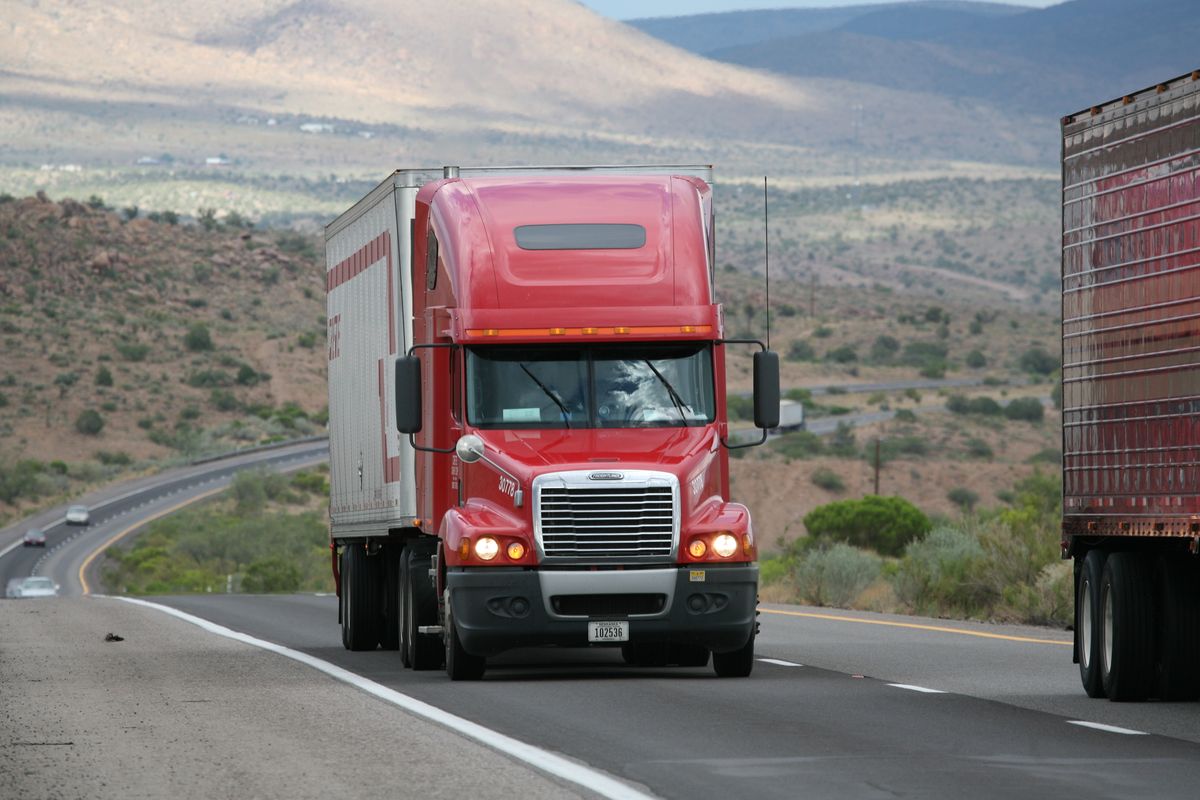
- LTL pricing scales with the space and weight you occupy. FTL is largely a fixed price for the equipment and the move.
- The domestic rule of thumb people repeat does not transfer to a cross-border lane, because the border adds cost items that are not proportional to pallet count.
- Every extra handling event in an LTL network is a chance for damage and for a discrepancy between paperwork and cargo.
- A consolidated crossing is a third option that sits between the two and is often the right answer for low volume.
- The only reliable break-even is your own: quote both for the same shipment on the same lane and compare the landed total.
Why the usual rule of thumb misleads on this lane
Because the border adds costs that do not scale with how many pallets you have.
Ask a domestic freight broker when to switch from LTL to FTL and you will get a pallet count. It is a reasonable heuristic for a domestic move, where cost is dominated by linehaul and space. On a US to Mexico lane, a set of costs enters that behaves differently. Customs clearance work is largely per shipment, not per pallet. The same is true of the value declaration, the documentation review and the handoff between carriers at the border. A shipment of two pallets and a shipment of twenty can generate very similar clearance effort. That changes the shape of the comparison. Per-pallet costs favor LTL at low volume. Per-shipment costs push you toward fewer, larger shipments, which favors either FTL or consolidation. The heuristic ignores the second force entirely, which is why it points to the wrong answer often enough to matter.

How to find your own crossover in one afternoon
Quote both structures for the same real shipment and compare the landed total, not the linehaul.
This is a measurement, not a calculation, and it takes less time than reading about it. Step one. Take a shipment you actually ship, with real dimensions, real weight, real freight class and the real destination in Mexico. Step two. Get an LTL quote and an FTL quote for that exact shipment. Ask both to include the border: clearance, any border transfer or drayage, and the Mexican leg to the door. Step three. Add the accessorials that apply to you and not to the quote sheet. Liftgate, limited access, inside delivery, appointment scheduling, detention. LTL carriers price these separately and they are where LTL quotes drift upward. Step four. Compare the totals. Then repeat the exercise at a pallet count fifty percent higher. Two points are enough to see which way your crossover sits relative to your normal shipment size. Do this once per lane and once per year, or whenever your product mix changes materially. Freight class and density change the answer more than most shippers expect.
The costs that move the break-even lower
Handling damage, discrepancy risk and schedule dependence all push toward taking the trailer.
Price is not the only axis, and on a cross-border lane the non-price factors have a price. Handling events. In an LTL network your pallets are unloaded and reloaded at terminals. Each of those is a chance for damage and a chance for a piece to travel separately from its paperwork. In a full truckload the goods are loaded once and unloaded once. Documentation discrepancies. A clearance hold caused by a mismatch between the declared cargo and the physical cargo is expensive in days, not in dollars. Fewer handling events means fewer opportunities for that mismatch to appear. Schedule. LTL moves on the network's schedule. If your goods need to be at a specific place on a specific day, the flexibility of a dedicated trailer has a value that does not appear in the quote comparison. Product fragility and value. High-value or fragile goods carry a larger expected loss per handling event, which effectively lowers the pallet count at which FTL becomes the rational choice. None of these turn a five-times price difference into a tie. They routinely turn a fifteen percent difference into one.
The third option most comparisons leave out
Consolidation: your pallets share a trailer with other shippers under one crossing.
Framing this as a binary choice hides the option that is often correct for a growing seller. In a consolidation program, several shippers' goods cross together in one movement. You get the handling profile closer to a full truckload than to an LTL network, and the border cost is shared across the group rather than carried alone. The trade is schedule. The crossing leaves when the program says it leaves, not when you say so. For replenishment freight that is usually fine. For a shipment with a hard delivery date it is not. If your volume sits below your FTL crossover but you are unhappy with LTL handling, this is the option to price before you accept either. It is also the structure that pairs naturally with border staging, because staging gives you the buffer that makes a fixed departure schedule workable.
A short decision path
Volume first, then time sensitivity, then fragility.
If you can fill a trailer, book the trailer. Nothing else needs checking. If you have most of a trailer, price both anyway. Partial truckload pricing sometimes beats LTL well below a full load, particularly on lanes where the carrier has a backhaul. If you have a few pallets and a hard date, LTL or expedited, and accept the handling. If you have a few pallets and no hard date, price consolidation before LTL. This is the case where the default choice is most often the wrong one. If your goods are fragile or high value, move the threshold down. Pay for fewer handling events. Across all of these, the item that decides your actual transit time is not the service level; it is whether the clearance work was done before the truck reached the bridge.
LTL, consolidation and FTL on a Mexico lane
| LTL | Consolidation | FTL | |
| Cost behavior | Scales with space occupied | Border cost shared across shippers | Close to fixed for the trailer |
| Handling events | Several, at network terminals | Few, one grouped crossing | Loaded once, unloaded once |
| Schedule control | Network schedule | Program schedule | Yours |
| Best for | A few pallets with a hard date | Low volume, flexible timing | Full or near-full loads, fragile or high value |
How we price this for customers
We quote the structures side by side for the same shipment rather than recommending one and letting you discover the other later. That includes consolidation, because for sellers below a full load it is frequently the option that wins and it is the one most often left out of a comparison.
We run warehouses in Laredo and Monterrey, which is what makes consolidation available as a real option rather than a theoretical one: there is somewhere for your pallets to wait while a crossing is assembled, and somewhere for them to land on the Mexican side.
If your volume is growing, we will tell you when your crossover has moved. It usually moves before the seller notices.
Definitions
- LTL: Less than truckload: your pallets share a trailer with other shippers' freight and move through a terminal network.
- FTL: Full truckload: you pay for the whole trailer and your goods travel without being handled at intermediate terminals.
- Accessorial: A charge for a service beyond basic dock-to-dock transport, such as a liftgate, an appointment or a limited-access delivery.
- Break-even: The shipment size at which two pricing structures cost the same, so that above it one becomes cheaper than the other.
Frequently asked questions
How many pallets before FTL is cheaper to Mexico?
There is no reliable universal number on this lane. Quote both structures for a real shipment including the border legs and compare the landed totals, then repeat at a higher pallet count to see which side your normal shipment falls on.
Is LTL riskier for cross-border freight?
It involves more handling events, and each one is an opportunity for damage or for a discrepancy between the paperwork and the cargo. That risk is real but manageable; it mostly argues for moving the break-even down rather than avoiding LTL.
What is partial truckload and where does it fit?
Partial truckload prices a portion of a trailer without putting your freight through a terminal network. It sometimes beats LTL well below a full load, which is why it is worth quoting rather than assuming.
Does the structure change my customs process?
The declaration requirements are the same. What changes is how many separate clearance events you generate and how many handling steps could create a mismatch between what is declared and what is on the truck.
Related Reading
- how cross-border LTL actually works
- Laredo to Monterrey FTL transit time
- how to ship a pallet to Mexico
- what a pallet from Texas costs
- through-trailer, transload and cross-dock
- our LTL and FTL freight service
Get LTL, consolidation and FTL priced side by side
Sources
- Federal Motor Carrier Safety Administration (fmcsa.dot.gov)
- US Customs and Border Protection, commercial trade (cbp.gov)
Note: This content is for general information only and is not legal, tax or customs advice. Rates and rules can change often in 2026; verify the current details with an official source (SAT, DOF, CBP) or a licensed customs broker before acting.
How this was made: The BringGo Ship team chose the topic and the sources. The text was drafted with AI assistance, its figures and regulatory details were checked against official sources (DOF, SAT, ANAM, CBP), and the article was reviewed by our team before publication.
Daniel Brooks
Logistics and Customs Lead
Covers US Mexico cross-border logistics and customs at BringGo Ship, with warehouses in Laredo and Monterrey.
View profile