

Contents
- Late shipment rate measures despatch, not delivery
- Valid tracking rate is where the crossing does bite
- The labeling rule that generates complaints nobody attributes correctly
- The 90 day guarantee extends the window in which problems surface
- What to watch, and in what order
- The platform cost side, for completeness
- Putting numbers on the handling time decision
- Reading a rise in late shipment rate correctly
- Tracking handover, in practice
- The three checks that keep valid tracking rate healthy
- Why complaints arrive in a second wave
- The quarantine decision, in numbers
- A monthly review that fits in fifteen minutes
- How BringGo Ship Handles This
- Frequently asked questions
Account health is where cross border fulfillment failures become visible, and by the time they are visible they have already been accumulating for weeks. Two metrics carry most of the risk for a seller shipping into Mexico from a US base: late shipment rate and valid tracking rate. Both are affected by the crossing, and neither is fixed by working harder in the warehouse.
This article covers what each metric measures, which fulfillment decisions move it, and the compliance issue that generates complaints most sellers attribute to the wrong cause.
Late shipment rate measures despatch, not delivery
The metric counts orders confirmed as shipped after the expected despatch date. It is a warehouse metric, and a border crossing does not directly affect it, which is the first thing sellers get wrong when they see it rise.
What does affect it is the handling time a seller publishes. A handling time set for domestic despatch, applied to orders that require a consolidation and a customs entry before anything moves, produces a structural failure rather than an occasional one. The fix is to set handling time against the actual process, not against a competitor's number.
| Fulfillment path | What happens before despatch | Realistic handling time |
| Local stock, domestic pick and pack | Pick, pack, manifest | Same or next day |
| US stock, per order crossing | Pick, entry, clearance, transfer | Several days |
| US stock, batched crossing | Wait for the batch, then clear | Depends on batch cadence |
The third row is where sellers get caught. Batching is correct for cost, because the fixed customs charges are per entry, but it inserts a wait that has to be inside the published handling time rather than outside it.
Valid tracking rate is where the crossing does bite
This metric requires a trackable, verifiable tracking number that shows movement and delivery. A shipment that crosses a border frequently changes carrier: an origin carrier to the border, a customs process, then a Mexican carrier for the final leg.
If the tracking number given to the marketplace belongs to the first carrier, it stops updating at the border. The parcel is delivered, the buyer has it, and the platform sees a tracking number that went quiet 4 days ago. That is a valid tracking failure caused by a handover, not by a late parcel.
Three practices prevent it. Provide the tracking number that covers the final mile in Mexico. Confirm the carrier is one the platform recognizes for the destination country. And check that the number becomes scannable at the moment it is uploaded, not several hours later.
The return side of the same metric set is covered in Dropshipping Returns From Mexico: Local Address, Restocking and Re Entry.
The labeling rule that generates complaints nobody attributes correctly
Product information has to be presented in Spanish, and this is a legal requirement rather than a listing preference:
"Los datos que ostenten los productos o sus etiquetas, envases y empaques y la publicidad respectiva, tanto de manufactura nacional como de procedencia extranjera, se expresarán en idioma español y su precio en moneda nacional."
Ley Federal de Protección al Consumidor
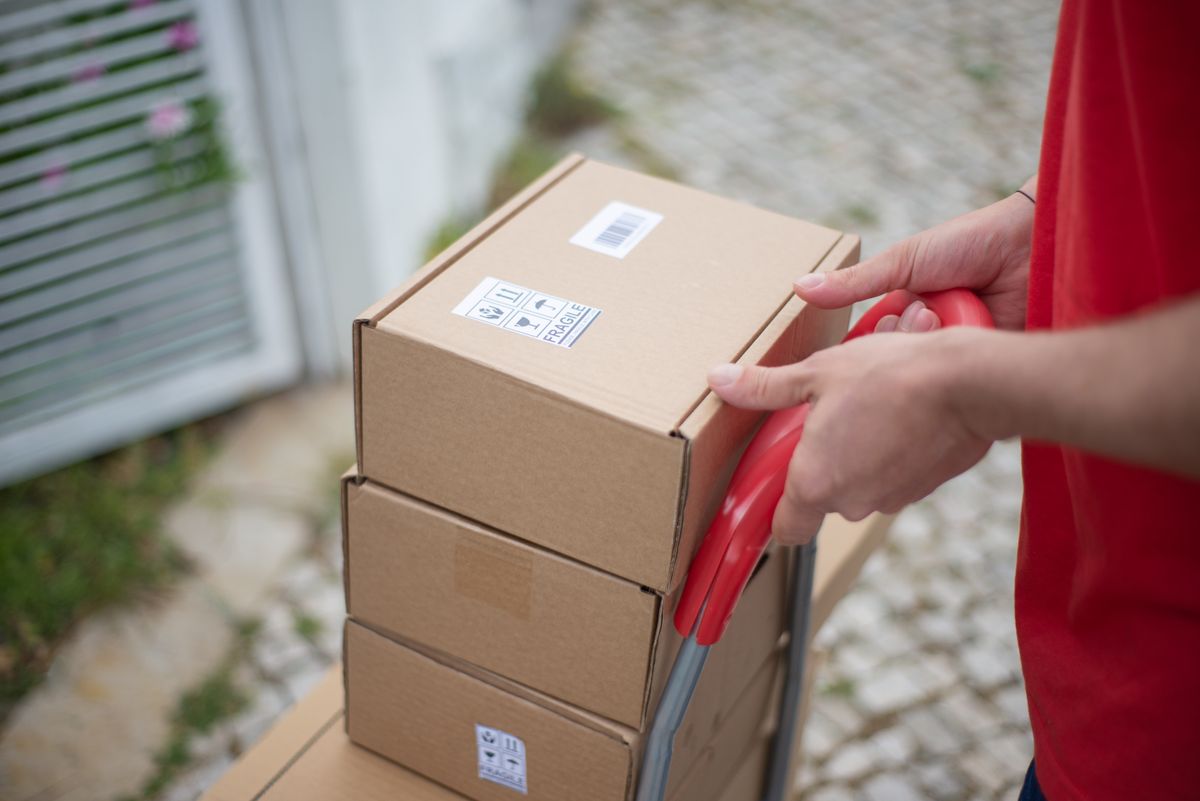
A unit that arrives with English only packaging generates a buyer complaint that reads as a product quality issue or a wrong item received. It is neither. It is a labeling failure that happened at receiving, weeks before the order, and it will repeat on every unit from the same inbound until the stock is exhausted or relabeled.
The signature is a complaint pattern concentrated on one SKU with no defect trend behind it. When that pattern appears, the receiving record for that SKU is where to look, not the listing.
The 90 day guarantee extends the window in which problems surface
"Para los efectos del párrafo anterior la garantía no podrá ser inferior a noventa días contados a partir de la entrega del bien o la prestación del servicio."
Ley Federal de Protección al Consumidor, Article 77
Consumer protection sets the guarantee at no less than 90 days from delivery. That is longer than many marketplace return windows, and it means a unit sold in week 1 can generate an obligation in week 12.
For account health the consequence is that a bad inbound does not stop hurting when the return window closes. Complaints continue to arrive across a longer tail, and a seller who has stopped watching a SKU because its return window expired will not connect the late complaints to the early cause.
The promise itself is upstream of the metric, and how to set one that transit times can actually support is covered in Setting a Delivery Promise for Mexico That You Can Actually Keep.
What to watch, and in what order
- Handling time against actual despatch. If the gap is structural rather than occasional, the published time is wrong, not the warehouse.
- Tracking continuity across the handover. The number that reaches the platform must be the one that shows the final delivery.
- Complaint concentration by SKU. A cluster on one SKU with no defect trend points at labeling or packaging from a single inbound.
- Days from delivery to complaint. A long tail is normal given the 90 day floor, and reading it as a new problem leads to fixing something that is not broken.
The platform cost side, for completeness
"Si las ventas mensuales son menores a $26,000 MXN, la comisión de suscripción será de solo $75 MXN al mes"
Amazon México, announcement of 17 February 2026
Fee structure does not affect account health directly, but it affects the decision that does: whether to hold stock locally. A seller below the stated monthly threshold pays a small fixed platform cost, which means the placement decision is driven almost entirely by logistics rather than by platform overhead.
Putting numbers on the handling time decision
The published handling time has to cover the slowest realistic path, not the fastest observed one. Batching orders for a consolidated crossing is correct on cost, and the arithmetic shows why: the customs processing fee carries a floor of 462 pesos and brokerage starts at 3,500 MXN, both per entry rather than per unit.
Consolidating 200 orders into 1 entry spreads roughly 3,962 pesos of fixed charges across 200 units, which is about 20 pesos each. Clearing those 200 orders as 20 separate entries multiplies the same charges by 20, which is roughly 79,240 pesos, or 396 pesos per unit. The saving is real, and the cost of it is a wait that must sit inside the published handling time.
| Batch cadence | Entries per month | Fixed cost per unit at 400 units | Added wait |
| Daily | Roughly 22 | Highest | Under 1 day |
| Twice weekly | Roughly 9 | Moderate | Up to 3 days |
| Weekly | Roughly 4 | Low | Up to 6 days |
| Monthly | 1 | Lowest | Up to 30 days |
The middle two rows are where most operations settle. Daily batching keeps the promise short and pays the fixed charges 22 times. Monthly batching is cheapest per unit and produces a handling time no buyer will accept.
Reading a rise in late shipment rate correctly
When the metric moves, there are only 3 candidate causes and they are separable. The batch ran late, which is a scheduling problem. The batch ran on time but the published handling time was too short, which is a configuration problem. Or order volume spiked past the batch capacity, which is a planning problem.
Recording despatch date against batch date separates all 3 in a single column. Without it, every rise looks like a warehouse failure and gets the same unhelpful response.

Tracking handover, in practice
A cross border parcel typically has 2 or 3 tracking identities: an origin carrier reference, sometimes a consolidation reference, and a destination carrier reference. Only the last one shows delivery to the buyer.
The three checks that keep valid tracking rate healthy
- Scannable within hours, not days. A number uploaded before the destination carrier has scanned the parcel reads as invalid until the first scan appears.
- Recognized carrier for the destination. A carrier the platform does not map for Mexico produces a number that cannot be validated even when it works.
- Delivery event present. A number that shows movement but never a delivery event fails the metric even though the buyer has the parcel.
All 3 fail silently. Nothing in the seller interface announces them, and the metric moves 2 to 3 weeks later when enough orders have accumulated to shift the percentage.
Why complaints arrive in a second wave
A bad inbound produces 2 waves of complaints separated by weeks. The first wave comes from buyers who open the parcel immediately, which is a minority. The second comes across the following 60 to 90 days as the rest of the inbound sells through and the statutory guarantee window keeps the door open.
Sellers who react to the first wave, find nothing wrong with the listing, and move on are then surprised by the second. The correct response to a first wave is to check the receiving record for that inbound, not the listing, and to quarantine the remaining units of that lot while the check runs.
The quarantine decision, in numbers
Take a 500 unit inbound where 3 complaints arrive in the first 2 weeks against 60 units sold. That is a 5 percent complaint rate on the sold portion, against a catalog baseline that is usually well under 1 percent. With 440 units still in stock, allowing the lot to continue selling projects roughly 22 more complaints.
Quarantining and relabeling 440 units costs a few hours of warehouse labor. Not quarantining costs 22 complaints, the associated refunds, and a metric that takes months to recover because it is calculated on a trailing window. The arithmetic is rarely close.
A monthly review that fits in fifteen minutes
Four questions, in order. Did any batch miss its scheduled crossing, and if so why. Did valid tracking fall on any specific carrier or lane. Is any single SKU carrying more than its share of complaints. And is any inbound lot still selling while under suspicion.
Answering those 4 monthly catches most account health problems while they are still 20 orders rather than 200. Waiting for the platform to flag a metric means responding after the trailing window has already absorbed the damage, and trailing windows recover slowly by design.
Which tracking events actually exist to report, and which are worth alerting on, is covered in Door to Door US to Mexico: What Tracking and Proof of Delivery Actually Prove.
How BringGo Ship Handles This
BringGo Ship sets the batch cadence with the seller so the published handling time covers the real process, and provides the destination carrier tracking number that shows the final mile rather than one that stops at the border. Our facilities hold a suspect inbound lot back from sale, which stops a labeling problem at twenty orders instead of two hundred. Sellers review four numbers monthly: batch adherence, tracking continuity, complaint concentration by SKU, and any lot still selling under suspicion.
Frequently asked questions
Does a customs delay count against late shipment rate? Not directly, because the metric measures despatch confirmation. It does affect delivery estimates and buyer experience, which surface elsewhere.
Which tracking number should be uploaded? The one that shows the final mile in the destination country. A number that stops at the border is treated as tracking that stopped working.
How long should a SKU be watched after a bad inbound? At least through the statutory guarantee period, which is a minimum of 90 days from delivery rather than the marketplace return window.
Note: This content is for general information only and is not legal, tax or customs advice. Rates and rules can change often in 2026; verify the current details with an official source (SAT, DOF, CBP) or a licensed customs broker before acting.
How this was made: The BringGo Ship team chose the topic and the sources. The text was drafted with AI assistance, its figures and regulatory details were checked against official sources (DOF, SAT, ANAM, CBP), and the article was reviewed by our team before publication.
Daniel Brooks
Logistics and Customs Lead
Covers US Mexico cross-border logistics and customs at BringGo Ship, with warehouses in Laredo and Monterrey.
View profile