

Contents
- What does US to Mexico logistics actually involve?
- Who can legally import into Mexico?
- How long does freight take from the US to Mexico?
- What does it cost to ship from the US to Mexico?
- What documents does a US to Mexico shipment need?
- Three ways to structure a US to Mexico import
- Definitions
- Frequently asked questions
- Can a US company import into Mexico in its own name?
- Do I need a Mexican customs broker?
- How long does it take to ship from Texas to Mexico?
- Are goods shipped from the US duty free under USMCA?
- What is the IVA on imports into Mexico?
- What changes on 1 October 2026?
- Related Reading
- Sources
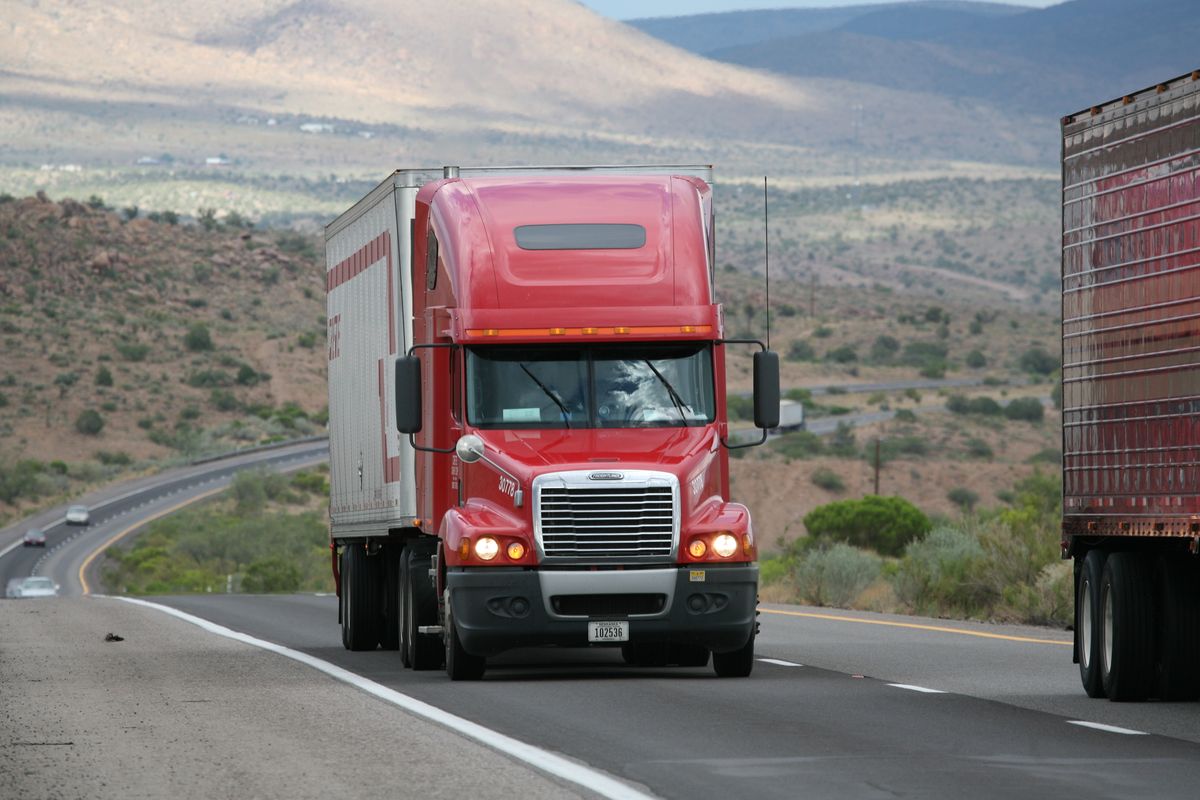
US to Mexico logistics means moving freight from a US origin, across a land border crossing such as Laredo, through Mexican customs clearance, and on to a final Mexican destination. Every shipment needs a Mexican importer of record, a licensed Mexican customs broker, a pedimento, and correct HS classification. Typical door-to-door transit is 3 to 5 business days from Texas to central Mexico when documents are clean; documentation problems, not distance, cause most delays.
- Port Laredo handled 353.94 billion dollars of trade in 2025, up 4.4 percent over 2024, with more than 97 percent of it tied to Mexico. It remains the top US land port.
- Mexican law requires a licensed customs broker (agente aduanal) for virtually all commercial imports. A US freight forwarder alone cannot clear your goods.
- The importer of record must be a Mexican tax-registered entity with an RFC and must appear on the padrón de importadores. Foreign sellers without a Mexican entity need a FIOR or an import-of-record service.
- From 1 October 2026 the Manifestación de Valor must be filed electronically through VUTCE. The paper transition runs until 30 September 2026.
- Mexico's standard IVA is 16 percent and is calculated on the customs value plus duty, not on the invoice value alone.
What does US to Mexico logistics actually involve?
An export clearance on the US side, a border crossing, a Mexican import clearance with a pedimento, and domestic delivery inside Mexico. Four distinct stages, each with its own paperwork.
The single most expensive misconception in this lane is treating Mexico as an extension of domestic US trucking. It is not. A shipment from Dallas to Monterrey is roughly the same distance as Dallas to Denver, but the two moves have almost nothing in common operationally. A US to Mexico shipment passes through four stages. First, US export clearance, which for most commercial goods means an Electronic Export Information filing when the shipment value exceeds the reporting threshold. Second, the physical border crossing, where a drayage carrier moves the trailer across the bridge. Third, Mexican import clearance, where a licensed Mexican customs broker files a pedimento and pays duties and IVA on behalf of the importer of record. Fourth, domestic delivery from the border to the final destination. Most shippers plan carefully for stages one, two and four, then discover that stage three is where everything actually stops. Mexican customs is documentary. It does not care how good your carrier is if the classification is wrong or the value manifest is missing. The practical consequence is that your choice of Mexican customs broker matters more than your choice of trucking company. A good broker prevents delays. A trucking company can only wait through them.
Who can legally import into Mexico?
Only a Mexican tax-registered entity holding an RFC and listed on the padrón de importadores. Foreign companies cannot import into Mexico in their own name.
This is the requirement that stops most US and international sellers, and it is worth stating plainly: you cannot import into Mexico as a foreign company. The importer of record must be a Mexican entity with an RFC (Registro Federal de Contribuyentes) and must be enrolled in the padrón de importadores, the official importer registry. Certain regulated categories additionally require enrollment in a sector-specific padrón. There are three workable structures. You can establish a Mexican legal entity, which gives you full control but takes months and creates ongoing tax obligations. You can sell on DDP terms to a Mexican buyer who imports in their own name, which is simplest but means you lose control of the customs process and your buyer absorbs the compliance burden. Or you can use a Foreign Importer of Record service, where a Mexican entity acts as importer on your behalf. The third route is what most Amazon Mexico and e-commerce sellers use, and it is what Amazon itself expects when it asks a foreign seller for a FIOR. It is legitimate and widely used, but it is a real legal relationship with real liability, not a paperwork formality. The FIOR is answerable to Mexican customs for the accuracy of what is declared. Whichever route you take, decide it before you ship, not while your trailer is parked in Nuevo Laredo.
How long does freight take from the US to Mexico?
Three to five business days door to door from Texas to central Mexico with clean documents. Border dwell time, not driving time, is the main variable.
Driving time is the predictable part. Laredo to Monterrey is roughly 230 kilometers and takes a few hours. Laredo to Mexico City is around 1,100 kilometers and is a long day and a half of driving. Neither of those numbers is what determines your delivery date. What determines it is border dwell. A shipment with a complete document set, correct classification and a broker who has the pedimento prepared in advance can cross and clear in under a day. A shipment missing a permit, carrying a value that customs questions, or classified under a code that triggers a regulatory requirement can sit for a week or longer. Mexican customs also applies a randomized inspection mechanism at clearance, so a proportion of shipments are physically examined regardless of how clean the paperwork is. You cannot avoid this, but you can make it fast: goods that match their description and documentation clear examination quickly. A realistic planning assumption for a well-documented LTL or FTL shipment is three to five business days from a Texas warehouse to a central Mexican destination. Build a buffer beyond that for first shipments, regulated categories, and anything crossing during peak season.
What does it cost to ship from the US to Mexico?
Freight, customs brokerage, duty, IVA and any inspection or storage charges. IVA at 16 percent applied to customs value plus duty is usually the largest single line.
Cross-border quotes are frequently compared wrongly because different providers include different things. Break the cost into components and compare like with like. Freight is the transport itself, which may be a single through-carrier or a combination of US linehaul, drayage across the bridge, and a Mexican domestic carrier. Customs brokerage is the fee charged by the Mexican agente aduanal for preparing and filing the pedimento; this is a professional fee and is separate from the taxes. Duty depends entirely on HS classification and origin. IVA is 16 percent, applied to the customs value plus duty, which means duty compounds into the tax base. Then there are the charges that do not appear on any quote: inspection fees if your shipment is selected for examination, storage if it is held, demurrage if a trailer waits, and correction costs if a pedimento has to be amended. These are the items that turn a competitive quote into an expensive shipment. One structural point worth understanding: goods that qualify under USMCA rules of origin and are supported by a valid certificate of origin can enter duty free. Goods that merely ship from the United States do not qualify. Origin is about where the goods were produced or substantially transformed, not where they were loaded. Turkish, Chinese or European goods warehoused in Texas remain Turkish, Chinese or European for customs purposes.

What documents does a US to Mexico shipment need?
Commercial invoice, packing list, bill of lading, pedimento, electronic Manifestación de Valor, and a USMCA certificate of origin where the goods qualify.
The commercial invoice must show a defensible transaction value, a clear description of the goods, and the parties. Vague descriptions such as 'samples', 'parts' or 'gifts' invite questioning and delay. The pedimento is the Mexican customs declaration itself, prepared and filed by your customs broker. It is the definitive legal record of the import and is what you will be asked for in any later audit. The Manifestación de Valor is a sworn statement supporting the declared customs value. This is the document with an immediate deadline: following the extension published on 22 September 2026, the coexistence period for the paper format runs until 30 September 2026, and from 1 October 2026 electronic filing through VUTCE is mandatory. Anyone still relying on the paper format needs to have moved. A USMCA certificate of origin is required to claim preferential duty treatment, and only for goods that genuinely qualify. Claiming preference on non-qualifying goods is a compliance exposure, not a shortcut. Regulated categories add their own layer. Food, supplements, cosmetics and medical devices may require COFEPRIS authorization; electronics and appliances may require NOM certification and Spanish-language labeling. These are determined by HS code, which is why classification is the first thing to get right rather than the last.
Three ways to structure a US to Mexico import
| Structure | How it works | Best suited to |
| Own Mexican entity | You register a Mexican company, obtain an RFC and enrol in the padrón de importadores | Established volume, long-term market commitment |
| Sell DDP to a Mexican buyer | Your customer imports in their own name and handles clearance | B2B sales to importers who already have the structure |
| Foreign Importer of Record (FIOR) | A Mexican entity acts as importer of record on your behalf | E-commerce and Amazon Mexico sellers without a local entity |
Definitions
- Pedimento: The pedimento is the official Mexican customs declaration filed for every import and export, and it is the legal record of what was declared, classified and paid.
- Agente aduanal: An agente aduanal is a licensed Mexican customs broker who is legally authorized to file customs declarations and who carries personal liability for their accuracy.
- Padrón de importadores: The padrón de importadores is Mexico's official register of authorized importers, and an entity must be listed on it before it can import commercially.
Frequently asked questions
Can a US company import into Mexico in its own name?
No. The importer of record must be a Mexican tax-registered entity with an RFC and enrollment in the padrón de importadores. A US company must either establish a Mexican entity, sell DDP to a Mexican importer, or use a Foreign Importer of Record service.
Do I need a Mexican customs broker?
For virtually all commercial imports, yes. Mexican law requires a licensed agente aduanal to file the pedimento. A US freight forwarder can arrange transport but cannot clear goods through Mexican customs.
How long does it take to ship from Texas to Mexico?
Three to five business days door to door to central Mexico with complete documents. Border dwell time is the main variable, not driving distance. Documentation problems can extend this to a week or more.
Are goods shipped from the US duty free under USMCA?
Only if the goods themselves qualify under USMCA rules of origin and are supported by a valid certificate of origin. Shipping from the United States does not by itself confer origin. Goods produced elsewhere and warehoused in the US do not qualify.
What is the IVA on imports into Mexico?
The standard IVA rate is 16 percent, calculated on the customs value plus any applicable duty rather than on the invoice value alone. This means duty increases the tax base.
What changes on 1 October 2026?
Electronic filing of the Manifestación de Valor through VUTCE becomes mandatory. The coexistence period allowing the paper format runs until 30 September 2026, following the extension published by SAT on 22 September 2026.
Related Reading
- how a pedimento is structured
- choosing a US-Mexico freight forwarder
- completing a USMCA certificate of origin
- LTL options across the border
- whether you need a Mexican RFC
Plan your lane with warehouses on both sides of the border: BringGo Ship
Sources
- ANAM (Mexican National Customs Agency) (anam.gob.mx)
- SAT (Mexican tax authority) (sat.gob.mx)
- Port Laredo trade statistics (cityoflaredo.com)
Note: This content is for general information only and is not legal, tax or customs advice. Rates and rules can change often in 2026; verify the current details with an official source (SAT, DOF, CBP) or a licensed customs broker before acting.
How this was made: The BringGo Ship team chose the topic and the sources. The text was drafted with AI assistance, its figures and regulatory details were checked against official sources (DOF, SAT, ANAM, CBP), and the article was reviewed by our team before publication.
Daniel Brooks
Logistics and Customs Lead
Covers US Mexico cross-border logistics and customs at BringGo Ship, with warehouses in Laredo and Monterrey.
View profile