

Contents
- How does a bonded warehouse in Laredo work?
- How is a foreign trade zone different from a bonded warehouse?
- When should a US-Mexico shipper use one?
- Bonded warehouse vs foreign trade zone in Laredo
- Definitions
- Frequently asked questions
- How does a bonded warehouse work?
- What is the difference between a bonded warehouse and an FTZ?
- Do I pay US duty on goods re-exported to Mexico from Laredo?
- Why is Laredo a good location for these facilities?
- When should I not use a bonded warehouse or FTZ?
- Can I do assembly or repackaging in these facilities?
- Related Reading
- Sources
A bonded warehouse in Laredo lets you store imported goods without paying US duty until they leave the warehouse, for up to five years, under a customs bond. A foreign trade zone goes further: goods there are treated as outside US customs territory, with no time limit and no duty on items re-exported, for example to Mexico. Both defer or avoid duty, which suits cross-border and re-export flows.
- In a US bonded warehouse, dutiable goods may be stored without paying duty for up to five years from import (CBP).
- A foreign trade zone is treated as outside US customs territory for duty purposes, with no storage time limit (CBP, ITA).
- Goods re-exported from an FTZ, for example to Mexico, do not trigger US import duty (CBP).
- Laredo is the one of the largest US foreign trade zones for export warehousing and distribution (Laredo EDC).
- Laredo FTZ No. 94 has 7 magnet sites and 6 usage-driven sites with more than 40 operators (Laredo EDC).
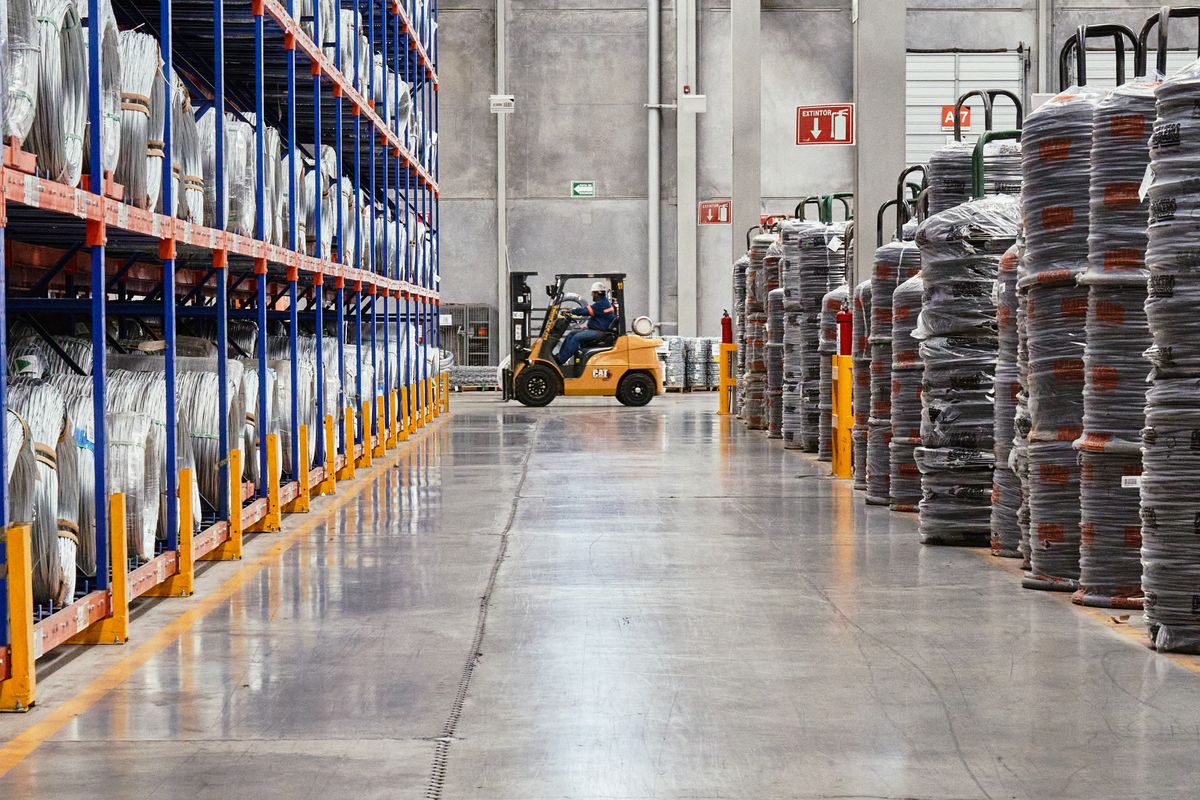
How does a bonded warehouse in Laredo work?
A bonded warehouse stores imported, dutiable goods under a customs bond without paying duty until the goods are withdrawn, for up to five years. When goods leave for US consumption, duty is paid; if they are exported instead, US duty can be avoided. It defers the tax and gives you flexibility on timing.
A customs bonded warehouse is a secured facility, authorized by US Customs and Border Protection, where imported dutiable goods can be stored, and in some cases manipulated, without paying import duty at the time they arrive. The duty is deferred: it becomes payable only when the goods are withdrawn for consumption into the US market, and goods may remain in the bonded warehouse for up to five years from the date of import. The arrangement runs under a bond, a financial guarantee shared by the importer and the warehouse operator, which is how customs secures the deferred duty. For a cross-border shipper, the appeal is timing and flexibility. You can bring goods close to the border, hold them without tying up cash in duty, and decide later whether they enter the US market, in which case you pay duty then, or move onward, for example into Mexico. Laredo is a natural place for this because it is the main US-Mexico land gateway, so goods staged in a Laredo bonded facility are already positioned for the crossing. The core idea is simple: a bonded warehouse lets you separate the moment goods arrive from the moment you pay duty, which is valuable when the final destination or timing is not yet fixed.
How is a foreign trade zone different from a bonded warehouse?
A foreign trade zone is treated as outside US customs territory, so there is no time limit, no bond required, and no duty on goods re-exported. Bonded warehouses defer duty for up to five years under a bond; FTZs can avoid it entirely for re-exports and allow more value-added work.
Bonded warehouses and foreign trade zones both let you avoid paying duty upfront, but they work differently and suit different needs. A bonded warehouse defers duty for up to five years and requires a customs bond for each entry. A foreign trade zone, or FTZ, goes further: for duty purposes, goods inside it are treated as if they are outside US customs territory altogether. That brings three practical differences. First, there is no storage time limit in an FTZ, unlike the five-year cap in a bonded warehouse. Second, an FTZ does not require the same per-entry bond. Third, and most important for cross-border shippers, goods re-exported from an FTZ, for example moved onward into Mexico, never trigger US import duty at all, whereas in a bonded warehouse the mechanics are about deferral. FTZs also generally allow more value-added operations, such as kitting, assembly and repackaging. Laredo is a strong FTZ location: it is the one of the largest US foreign trade zones for export warehousing and distribution, and its FTZ No. 94 includes 7 magnet sites and 6 usage-driven sites with more than 40 operators. For a business staging goods that will move into Mexico, the FTZ's duty-free re-export treatment is often the deciding advantage.
When should a US-Mexico shipper use one?
Use a bonded warehouse or FTZ when you want to defer or avoid US duty on goods that may be re-exported to Mexico, when timing or destination is uncertain, or when you need to stage inventory at the border. For goods that will clearly enter the US market soon, standard entry may be simpler.
The decision comes down to what happens to the goods and when. A bonded warehouse or FTZ makes the most sense in a few situations. The clearest is re-export: if goods are coming from a third country and will move onward into Mexico rather than being sold in the US, an FTZ lets them pass through without ever incurring US import duty, which can be a decisive saving. Another is timing uncertainty: if you are not yet sure whether goods will enter the US or move on, deferring the duty decision keeps your options open and your cash free. A third is border staging: holding inventory in Laredo, at the main US-Mexico gateway, positions it for a fast crossing, and doing so in a bonded or FTZ facility means you are not paying US duty to stage goods that are destined for Mexico anyway. On the other hand, if goods are clearly entering the US market for domestic sale in the near term, a standard customs entry may be simpler than the added administration of a bonded or zone status. The right choice depends on your flow, so it is worth mapping where goods actually go. An operator with border facilities in Laredo can advise on and provide the appropriate structure, so the duty treatment matches how your goods really move.

Bonded warehouse vs foreign trade zone in Laredo
| Feature | Bonded warehouse | Foreign trade zone (FTZ) |
| Duty on arrival | Deferred | Not treated as imported |
| Storage time limit | Up to 5 years | No time limit |
| Bond required | Yes, per entry | Not the same per-entry bond |
| Re-export to Mexico | Deferral mechanics | No US import duty |
| Value-added work | Limited | Kitting, assembly, repackaging |
Definitions
- Bonded warehouse: A bonded warehouse is a customs-authorized facility where imported dutiable goods can be stored without paying duty until they are withdrawn, for up to five years.
- Foreign trade zone (FTZ): A foreign trade zone is a designated US area treated as outside customs territory for duty purposes, allowing deferred or avoided duty and value-added operations.
- Customs bond: A customs bond is a financial guarantee that secures the duties and obligations owed to customs on imported goods.
Frequently asked questions
How does a bonded warehouse work?
It stores imported dutiable goods under a customs bond without paying duty on arrival. Duty is deferred until the goods are withdrawn for US consumption, and they may stay up to five years. If exported instead, US duty can be avoided. It separates when goods arrive from when you pay duty.
What is the difference between a bonded warehouse and an FTZ?
A bonded warehouse defers duty for up to five years under a per-entry bond. A foreign trade zone treats goods as outside US customs territory, with no time limit, no per-entry bond, no duty on re-exports, and more value-added operations allowed. FTZs suit re-export flows like moving goods into Mexico.
Do I pay US duty on goods re-exported to Mexico from Laredo?
From a foreign trade zone, no. Goods re-exported from an FTZ, such as onward into Mexico, do not trigger US import duty. That is a key reason cross-border shippers stage Mexico-bound goods in an FTZ rather than making a standard US entry and paying duty they do not owe.
Why is Laredo a good location for these facilities?
Laredo is the main US-Mexico land gateway and the one of the largest US foreign trade zones for export warehousing and distribution. Its FTZ No. 94 has 7 magnet and 6 usage-driven sites with over 40 operators. Goods staged there are positioned for a fast crossing into Mexico.
When should I not use a bonded warehouse or FTZ?
When goods are clearly entering the US market for domestic sale soon. In that case a standard customs entry may be simpler than the added administration of bonded or zone status. Bonded and FTZ facilities pay off mainly for re-export, timing uncertainty, or border staging.
Can I do assembly or repackaging in these facilities?
In a foreign trade zone, generally yes. FTZs allow value-added operations like kitting, assembly and repackaging, which a standard bonded warehouse limits. For a cross-border business that preps goods for Mexico, that flexibility, combined with duty-free re-export, is a significant advantage.
Related Reading
- border warehouse fulfillment in Laredo and Monterrey
- how cross-border shipping works
- IMMEX benefits for US shippers
- our Laredo, Texas warehouse
Stage and clear Mexico-bound goods through BringGo Ship's Laredo border operation
Sources
- CBP, foreign trade zones and bonded warehouses (cbp.gov)
- Laredo EDC, foreign trade zone (siteselection.laredoedc.org)
- International Trade Administration, FTZ No. 94 (ofis.trade.gov)
Note: This content is for general information only and is not legal, tax or customs advice. Rates and rules can change often in 2026; verify the current details with an official source (SAT, DOF, CBP) or a licensed customs broker before acting.
How this was made: The BringGo Ship team chose the topic and the sources. The text was drafted with AI assistance, its figures and regulatory details were checked against official sources (DOF, SAT, ANAM, CBP), and the article was reviewed by our team before publication.
Daniel Brooks
Logistics and Customs Lead
Covers US Mexico cross-border logistics and customs at BringGo Ship, with warehouses in Laredo and Monterrey.
View profile